Whistleblower System / Whistleblower
Support as an internal reporting office
In smaller companies in particular, you may prefer to report the matter to one person, to someone who directly shows that it is being taken seriously.
Within your own company, it can be somewhat more difficult to actually keep a conversation anonymous.
We offer you the option of taking over the internal reporting office, either by telephone, in person or electronically. Receiving reports from the outside increases the confidence of the reporter and we can clarify any ambiguities directly by asking questions.
Advice on the whistleblower system (whistleblower)
EU Directive 2019/1937 should already have been transposed into national law. It is highly advisable to implement the provisions of this directive very quickly in your own company now, as it is to be expected that the upcoming German law could come into force quickly at any time. So there is not much time left. You should inform yourself in good time and then prepare accordingly and know your new obligations.
We at Sicherheitsingenieur.NRW offer comprehensive advice on the whistleblower system. Our lawyer and engineer Donato Muro, LL.M. Compliance and Corporate Security, will be happy to answer any questions you may have and go through the significance of the EU directive for your company and your processes with you if you are active in one of the following areas:
- Architect's offices
- Construction companies
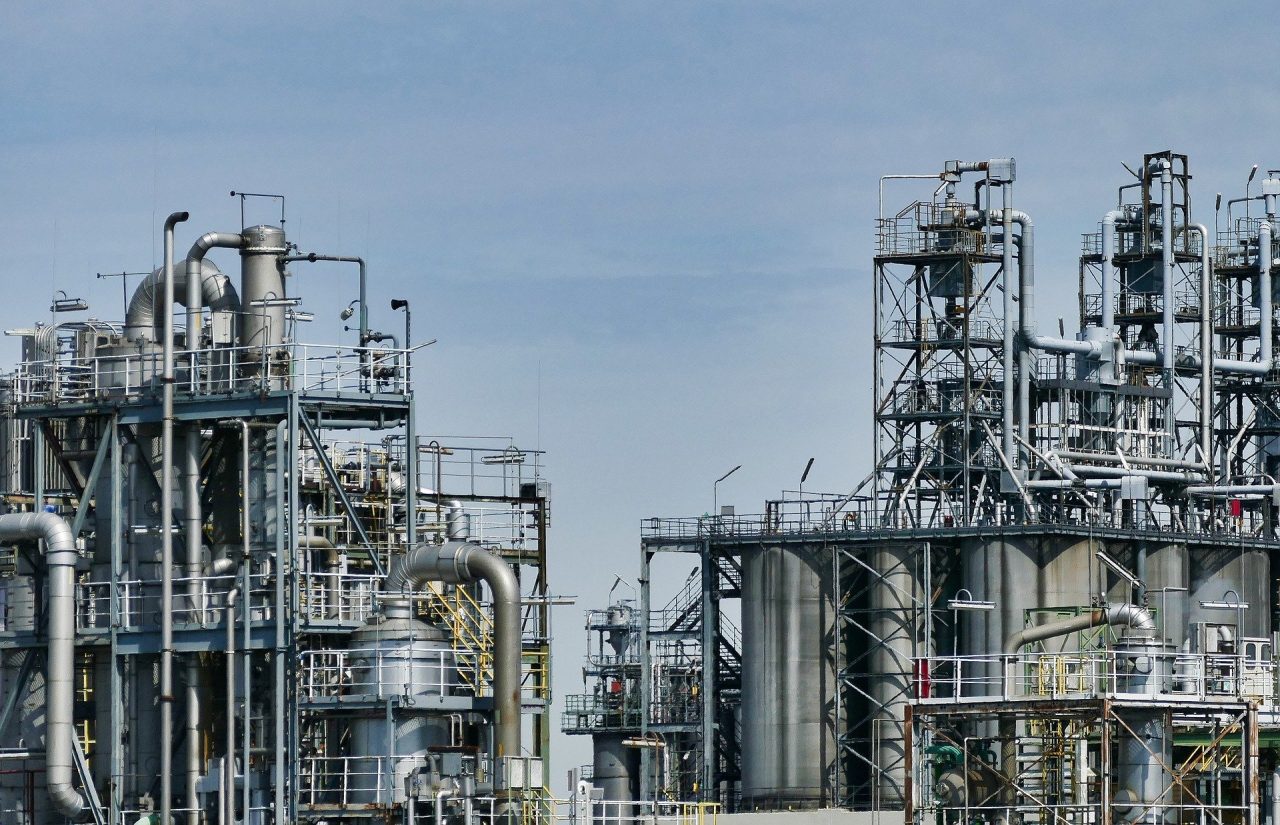
- Chemical or petrochemical plants
- Craft enterprises
- Engineering firms
- Recruitment agencies
- Manufacturing industry
- and similar
What does the whistleblower system mean for you?
Anyone can become aware of serious violations of laws, rules and regulations within their professional environment without anyone noticing the violations or even doing anything about them. Violations do not always have to be committed with malicious intent and the perpetrator is not always interested in concealing the facts.
As an employee, everyone has the opportunity to speak openly to their superiors about breaches of the law. However, it is very difficult for an ordinary employee to assess with certainty whether he or she will face reprisals for reporting this. Those who do not want to lose their job tend to look the other way and remain silent, even in the case of conspicuous incidents. In an environment where everyone looks the other way, colleagues and new recruits will become accustomed to keeping quiet about certain things.
On the one hand, not every tip-off has to be received or answered negatively and on the other hand, the name of the whistleblower is not required for every tip-off.
If, for example, it is common practice in a construction company to throw discovered, inhabited wasp nests in the garbage because of the high time pressure, this can also be done out of ignorance. Depending on the type of wasp, the independent removal of a wasp nest can result in fines of between €5,000 and €50,000. This issue is easy to clarify and if such fines can be saved, many building managers will
With EU Directive 2019/1937, the European Union has stipulated that all companies in the EU above a defined company size must set up a whistleblower system. Germany has not yet managed to incorporate these requirements from this directive into national law by the deadline of December 17, 2021.
However, public employers are probably already obliged to set up such a system. For other companies, the obligation does not yet exist in purely formal terms. However, a corresponding German law is already being prepared.
This means that certain companies will be obliged to set up a whistleblower system in the foreseeable future.
Contents of the EU directive on the whistleblower system
EU Directive 2019/1937 defines minimum standards for the protection of whistleblowers against retaliation by their employer for reporting certain breaches of EU law.
Whistleblowers are defined as current, former or future employees, but also other persons who fear retaliation if they make a report in a professional context.
The areas of law affected include environmental protection, consumer protection, prevention of money laundering and terrorist financing as well as financial services, financial products and financial markets.
A multi-level reporting system is specified, based on internal reporting, external reporting and disclosure, whereby the internal reporting channels are to be used primarily wherever possible.
There will be detailed specifications on how whistleblowing reports must be documented. The whistleblower must be able to check and correct the recorded report and also confirm it with a signature.
Whistleblowers are to be protected, for example, against suspension, dismissal or demotion, coercion, discrimination, but also against blacklisting and the withdrawal of licenses and permits. External whistleblowers must be protected, for example against the premature termination of a contract for goods and services.
In addition, effective deterrent measures must be established to prevent potential whistleblowers from knowingly providing false information.